

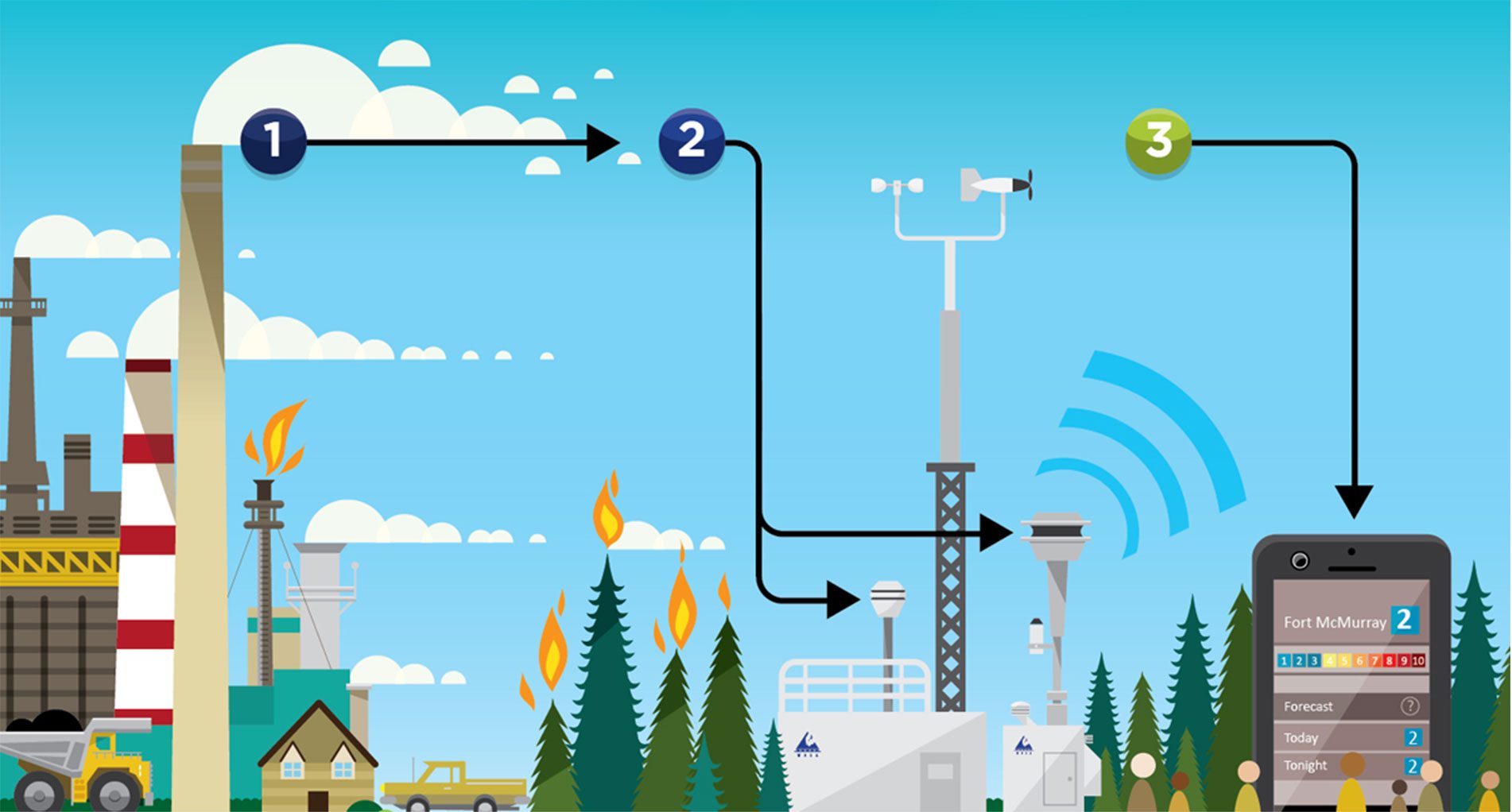
WBEA’s Ambient Air Monitoring Program
The WBEA has monitored and reported ambient air quality in northeastern Alberta since 1997. As part of its Ambient Air Monitoring Program, the WBEA currently conducts ambient air and meteorological monitoring at 30 locations. These locations include 24 permanent air monitoring stations that operate 12 months per year, 6 portable air monitoring stations that operate less than 12 months per year, and 2 meteorological towers.
The Ambient Air Monitoring Program functions to address multiple objectives and scientific questions as identified in the Environmental Protection and Enhancement Act (EPEA) approvals, the provincial Acid Deposition Management Framework (ADMF), 2009 Alberta Ambient Air Monitoring Strategy, 2019-2024
Alberta Science Strategy, and the Oil Sands Monitoring (OSM) Program monitoring objectives. For more information on air monitoring objectives and requirements, as they relate to the WBEA, click here.
In addition to providing data live from each station and annual trends, the WBEA reports fully quality-assured hourly ambient air monitoring data to Alberta Environment and Protected Areas (AEPA) on a monthly basis.
The image above demonstrates how the WBEA collects ambient air data through continuous analyzers and time-integrated samplers to ensure residents and stakeholders have the information they need to make informed environmental decisions.